SHECP Talks
During SHECP Talks, we invite guests who are or have been part of the Shepherd Higher Education Consortium on Poverty, to share valuable insights, experiences, and lessons they have learned throughout their time with SHECP.




Episodes

May 27, 2026
May 27, 2026
43 min
On this episode, Jen is joined by two SHECP alumnae – Kelsey Stapler (Birmingham-Southern College) and Leela Addepalli (Washington and Lee University).
In 2017, Kelsey was a SHECP Intern with Legal Aid in Charleston, WV. After law school, she returned to Charleston to work as public defender for Kanawha County. In 2024, Leela spent her SHECP summer with Kelsey as her supervisor and mentor at the public defender’s office. Listen in as Kelsey and Leela reflect on their internships, discuss the power of mentorship, and share advice for future interns.
More information: https://www.shepherdconsortium.org/post/shecp-talks-powerful-mentors-and-mindsets

Mar 27, 2026
Mar 27, 2026
24 min
On this episode of SHECP Talks, Emily Scaff, a student at Washington and Lee University, is joined by Jim Kvach, a farmer and engaged community member in Lexington, VA. Emily is pursuing a degree in Journalism with minors in Poverty and Human Capabilities Studies and Law, Justice, and Society. She is a member of W&L’s Campus KitchenLeadership Team, a group that works to address food insecurity in the area. Jim Kvach is a local farmer, Master Gardener, and board member of the Rockbridge Area Relief Association. For the past 18 years, Jim has grown and donated many tons of fresh fruit and produce to the local food assistance network, and he is now working on community-wide efforts to help neighbors nourish neighbors.
This podcast episode was part of SHECP's 2026 Springboard Event Series on Farming & Food Security.
For show notes and a full story visit: https://www.shepherdconsortium.org/post/shecp-talks-expertise-in-the-field-with-jim-kvach

Dec 17, 2025
Dec 17, 2025
32 min
On this episode of SHECP Talks, we are joined by two 2015 SHECP Interns — Kelsey Dowling and Samuel Hudson. Kelsey, a 2017 graduate of University Lynchburg, interned with Tenacity Inc., a Boston-based nonprofit that uses tennis to teach reading and life skills to youth from preschool through high school. Samuel, a 2017 graduate of Virginia Military Institute, spent his summer working with Code/Interactive, a New York City nonprofit that places high school students in coding internships. Kelsey and Samuel met during their SHECP summer, and the two are now married and living in Virginia. During their conversation with Abby, Kelsey and Samuel reflected on their SHECP internship experiences and how those insights continue to shape their personal and civic lives.
Though their internship placements were in very different settings, both Samuel and Kelsey highlight similar lessons of adaptability and empathy from their internships. Neither currently works in the nonprofit sector, however both emphasize how their early SHECP experience continues to inform their sense of purpose. Kelsey now serves on the board of her local “Girls on the Run”, while Samuel applies the values of equity and perspective he learned during his SHECP internship to his work in clinical research.
Both alumni also emphasize the importance of growth through discomfort. “Step outside of your comfort zone,” Samuel said. “Not too far to the point where you shut down but stretch yourself and stress yourself out a little bit. You grow through stress.” Kelsey encouraged future SHECP interns to build on what they already know when stepping into new, stressful environments. Try to find an internship that incorporates something you’re already interested in,” she said. “It gives you a point of comfort when everything else is new.”
For more information about topics discussed in the podcast:
Girls on the Run helps address mental and physical health concerns in young women by building confidence, fostering relationships, and encouraging the joy of movement.
Tenacity Inc. meets a critical need for enriching after-school, in-school and summer programs for Boston youth. Athletic activities are closely integrated with literacy, tutoring, and mentoring programs to help build academic motivation and achievement.
Code/Interactive which recently merged with Mouse is a nonprofit that empowers all youth and educators to engage with computer science and creative technology to solve real problems and make meaningful change in our world.
For more information about the episode: https://www.shepherdconsortium.org/post/shecp-talks-intern-insights-with-kelsey-dowling-samuel-hudson

Nov 14, 2025
Nov 14, 2025
50 min
Earlier this year, the Georgetown Center for Poverty and Inequality published an analysis of the U.S. Census Bureau's 2023 American Community Survey, that illustrated how the new work requirements in the “One Big Beautiful Bill Act” are poised to have a disproportionate effect on women, and, therefore, have possible long-term health, education, and future earnings impacts for children in those impacted households.
In October, Lelaine Bigelow, Executive Director of the GCPI, joined Jeremy Everett, Executive Director of the Baylor Collaborative on Hunger and Poverty, for a live episode of SHECP Talks. In addition to discussing GCPI’s recent analysis publication, they touched on Bigelow’s career journey and her motivations for this work, as well as her vision for GCPI’s role in reducing poverty and inequality. In closing, Bigelow reminded us that no matter how we are involved in this work - as researchers, teachers, students, practitioners - success hinges on our ability to “listen first and connect as humans.”

Oct 15, 2025
Oct 15, 2025
23 min
Updated October 2025
In this episode of SHECP Talks, Noor Al-Saloum, staff at Shepherd's Clinic in Baltimore, encourages us to view patient intake as a core component of exceptional patient care and effective patient advocacy.
Noor currently serves as a Community Health Worker with Shepherd's Clinic for the uninsured, a free clinic located in Baltimore. She has held several roles with Shepherd's Clinic over the past few years, including patient coordinator and executive assistant. Noor is interested in understanding the systemic barriers to healthcare access and equity and has been able to explore these issues firsthand through her work on the ground. As an aspiring primary care physician, Noor hopes her insight into healthcare challenges will inform her comprehensive approach and attention to addressing social determinants of health needs to provide the highest quality care.
For more information about the episode: https://www.shepherdconsortium.org/post/shecp-talks-expertise-in-the-field-with-noor-al-saloum-shepherd-s-clinic

Aug 26, 2025
Aug 26, 2025
12 min
Hi everyone and Welcome to SHECP Talks!
At this summer’s conference, the Friday night Welcome Dinner was co-hosted by SHECP’s six Policy and Nonprofit Leadership Interns. These amazing students had just completed their second summer with SHECP, and this time they had been focusing on understanding the challenges of leading anti-poverty organizations and the development of relevant policy.
For this episode, we will honored to share with you Katie Schadler’s welcome address. Katie, an English Major at Bucknell, completed her SHECP Summer internship at Miriam’s Kitchen in 2024 and then served as our first Policy & Nonprofit Leadership Intern with the National Alliance to End Homelessness.
Stay tuned after her speech to hear some bonus advice from this year’s interns. You can read her speech and view photos from her summers here: https://www.shepherdconsortium.org/post/reflecting-on-my-shecp-summers-schadler
We hope you enjoy.
May 7, 2025
May 7, 2025
37 min
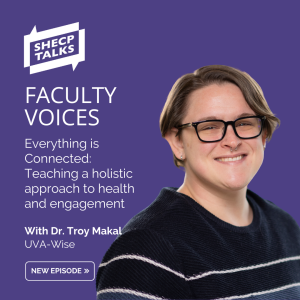
In this episode of SHECP Talks, Dr. Troy Makal, Assistant Professor of Biochemistry at UVA Wise, invites us to consider how deeply interconnected everything truly is, from molecules to community building. Dr. Makal focuses on addressing medical mistrust in rural Appalachia, health disparities, and nutritional access. Blending science with service, Dr. Makal shares how education and community engagement can work hand-in-hand to illuminate the challenges of poverty and empower students to be changemakers.
Dr. Makal discusses how he teaches students to approach community-based research through the idea that “everything is connected.” Applying the tenets of osteopathic medicine, a person is a sum of everything that affects them, body, mind, and spirit, to the classroom and community. This conversation highlights how engagement is highest when we use real-world and tangible learning to foster empathy, challenge assumptions, and inspire practical solutions to systemic issues like food insecurity and economic inequality. As he explains, his research on obesity and food deserts highlights how identifying “small problems that are systems of larger problems” is a powerful way to begin addressing entrenched social challenges.
Throughout the episode, Dr. Makal emphasizes the value of curiosity, humility, and action: “Your judgment means nothing… what you have instead is an opportunity to learn if you’re open to it.” He urges students to identify what fuels their passion early on, encouraging a life of purpose rooted in understanding and impact.
For more information about topics discussed in the podcast:
Community Nourishment Project: https://swvagmec.com/cnproject/
Southwest Virginia Graduate Medical Education Consortium: https://swvagmec.com/what-gmec-is-and-does/
Reach out to Dr. Makal through email vem4r@uvawise.edu
Thank you to Evan Clark, Geena Ravelo Cepero, and Lela Casey for supporting the production of today's episode.
Mar 31, 2025
Mar 31, 2025
54 min
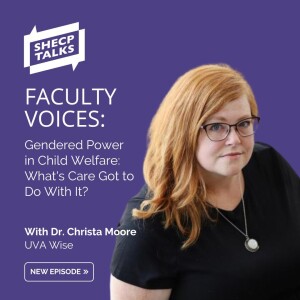
On this special episode of SHECP Talks, where we’re excited to share a recording of a recent event featuring Christa Moore, co-author of Gendered Power in Child Welfare: What's Care Got to Do with It? Joined by Ellen Prusinski, Moore delves into the critical issues explored in the book, including the flaws within Kentucky's child welfare system and the gendered power dynamics that shape it. Co-authored with Patricia Gagné, the book examines systemic shortcomings and offers thoughtful solutions to better care for children in need. Tune in for a compelling conversation on how we can reimagine child welfare systems for more equitable and effective care.
Dec 18, 2024
Dec 18, 2024
30 min
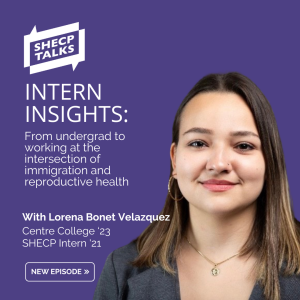
On this episode of SHECP Talks, Abby Gilbert, SHECP's Internship Director, is joined by Lorena Bonet Velazquez, a 2021 SHECP Summer Intern and a 2023 graduate of Centre College. Lorena reflected on how her SHECP internship with Asylee Women Enterprise (AWE) in Baltimore, MD and undergraduate experience as a health advocate in Central Kentucky shaped her career journey and led her to her current role as a Health Policy Advocate with the National Partnership for Women & Families.
During the Summer of 2021, Lorena spent eight weeks working at Asylee Women Enterprise (AWE), an agency that “supports asylum seekers, foreign-born trafficking survivors, and other forced migrants as they navigate the immigration legal process, heal from past trauma, and rebuild their lives in Maryland.” In addition to helping clients understand the processes of accessing healthcare, housing, food, and employment, AWE provides legal services and trainings to navigate the immigration system. During her Shepherd internship, Lorena supported social workers with case management and assisted the support groups and training programs. Her SHECP internship, in conjunction with her volunteer experience in Kentucky, highlighted public health issues that immigrants face, such as the lack of primary healthcare.
In her current role as Health Policy Advocate with the National Partnership for Women & Families, Lorena continues her work in the intersection of immigration rights and women’s health access. “I think seeing what I saw firsthand really propelled me to shift into a space where I am doing the research. I am doing the advocacy to address those issues.” Currently, she is part of a team championing the importance of data for telling stories and advocating for policy changes, especially concerning the future of women’s health for Black, Latina, and Native American women. The lessons Lorena learned – and the relationships she forged – as an intern continue to influence her work in data-driven advocacy for policy change.
Through her classwork, internships, and extracurricular activities, Lorena was able to identify, and then pursue, a career path that allows her to create change in spaces that feel deeply important to her. As current students consider how SHECP may play a role in their own career and personal journey, Lorena encourages them to ask questions, to keep learning new things and understanding their communities more deeply.
For more information about the SHECP Summer Internship Program or the topics discussed during this episode, visit: https://www.shepherdconsortium.org/post/shecp-talks-intern-insights-with-lorena-bonet-velazquez
May 21, 2024
May 21, 2024
39 min
On this episode of SHECP Talks, we continue to reflect on the links between resilience and childhood poverty. Jen was delighted to welcome Dr. Desiree Murray and Dr. Keadija Wiley to talk about the work of the UPSIDE Team at UNC-Chapel Hill and, specifically, their Be Calm Program.
The Understanding and Promoting Self-regulation Intervention across Development (UPSIDE) Team, focuses on self-regulation interventions that promote resilience for children and youth. They discuss the window of opportunity present during early adolescence to teach social-emotional skills that students use throughout their lives. Dr. Murray says that “self-regulation is about being able to manage your thoughts and feelings in a way that helps you regulate your feelings and supports social behavior and supports solving problems and achieving goals.”
The Be CALM Program is a research-based program seeking to teach educators and early adolescent students skills and strategies for lifelong social-emotional health and well-being. Dr. Murray and Dr. Wiley discuss the impact that their program can have. Research shows that an increase in stress cortisol levels in educators reflects in the stress cortisol levels of their students. “Especially for students with marginalized identities, being at school and being marginalized or discriminated against creates tremendous amounts of stress, which is then going to interfere or make it harder to listen and to learn skills or to feel like those skills are even relevant to you” Dr. Murray says. The Be CALM program seeks to help reduce these levels through mindfulness practices and support, not just for students but for educators as well.
Dr. Murray and Dr. Wiley discuss the multidisciplinary approach they take, utilizing cognitive as well as emotional learning to achieve their goals. Finally they discuss how, although the Be Calm program was originally designed for rural communities, there are applications for it in urban environments.
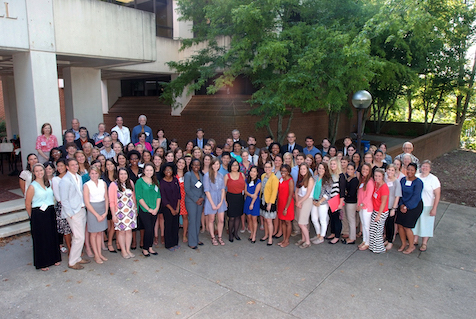
The Shepherd Higher Education Consortium on Poverty (SHECP), a 501(c)(3) nonprofit organization, encourages the study of poverty as a complex social problem, by expanding and improving educational opportunities for college students in a wide range of disciplines and career trajectories.
Through its programs, SHECP and its member institutions prepare students for a lifetime of professional and civic efforts to diminish poverty and enhance human capability, while also supporting connections among students, faculty, staff, and alumni engaged in the study of poverty.
Learn more at shepherdconsortium.org.